
The Wild Atlantic Way is one of the great coastal drives anywhere on earth, and in July it stops showing off and simply gets on with delivering.
You get long evenings, mild days, and villages that hum with life, and the call of the coast, that gentle pull to keep going just one more headland, is at its strongest.
The magic of it isn’t only the scenery. It’s the harbours and the chat and the weather that never once sits still.
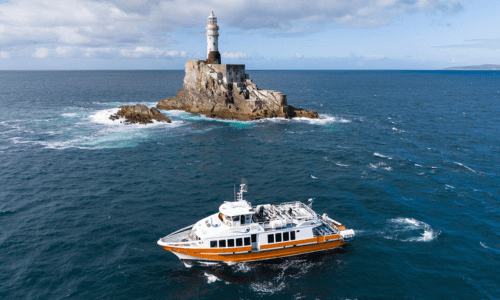
Coastal cruising the Wild Atlantic Way, July-style
The joy of it isn’t racking up big distances, it’s slowing right down and lingering a while in each place you land.
The route runs the whole western edge of the country, taking a bow through Donegal, Mayo, Galway, Clare, Kerry and Cork.
July gives you daylight until half ten, with a sunset after quarter to ten counted as perfectly normal, which leaves time for one more headland or one more pint. We won’t judge which.
The stops worth slowing for
A handful of highlights earn every bit of the fuss they get:
• Slieve League cliffs in Donegal, big and quiet
• Achill Island in Mayo, wild and wide
• Connemara in Galway, bog and mountain and sea
• The Cliffs of Moher in Clare, the famous drop
• The Dingle Peninsula in Kerry, all charm
• Mizen Head in Cork, the last gentle corner before America
Each one hands you a slightly different Atlantic, and not a single one of them disappoints.
Driving on the left, and living to tell it
Most visitors fret about driving on the left, which is a fair enough worry and a surprisingly short-lived one.
The roads are grand once you take them handy, and while the rural lanes are narrow, the traffic on them is lighter than you’d think. By the second day you’ll be waving the tractors past like a local.
A well-planned route takes the stress out of the whole thing, and we’re happy to design ones that balance the big views with easy driving. Plenty of guests start off in Dublin and then head west with the windows down.
Villages that feel like the real thing
The best of this coast is often found in its smallest places, in the likes of Doolin, Roundstone, Clifden, Sneem and Kinsale.
This is coastal cruising Ireland does properly, with music in the pub, seafood landed off the boat that morning, and a welcome that means every warm word of it.
Watch the fishing boats come back in, fall into talk with whoever’s beside you, and you’ll find it’s the loveliest part of the day, and it costs nothing at all.
Walking, wildlife and the water
Get out of the car whenever you can, because on foot you catch all the small things: the wildflowers, the seabirds, the old stone walls, and the beaches you’d never once spot from the road.
For a proper wander, try Connemara National Park, the Burren, or the Sheep’s Head Peninsula, all of them lovely under a long July sky.
Out on the water you might meet dolphins, seals or puffins, and it has to be said, they show off far worse than we ever do.
Mix it up beyond the coast
The coast alone could fill a whole trip, but a little variety tends to make a richer one.
You might add the calm of the Hidden Heartlands, the history of the Ancient East, or the drama up north, and because Ireland is small and packs a lot in, a mixed route shows you the real range of the place.
Planning your July run
July is a popular month, so do book early, because the good coastal beds go first. Consider that your gentle warning.
Give yourself more time than the mapping app suggests, since the scenery will make you stop again and again, and that slowing down isn’t a delay at all. It’s the whole point of the thing.
The call of the coast was never really about arriving anywhere quickly. It’s about lingering, and letting the place set the pace.
Along the Wild Atlantic Way, every bay, harbour and headland hands you another good reason to stay put a while longer.
If you’re planning a July coast trip, let us map a route that leaves you room to breathe.
The road is waiting, and so is the coast. Take
You get long evenings, mild days, and villages that hum with life, and the call of the coast, that gentle pull to keep going just one more headland, is at its strongest.
The magic of it isn’t only the scenery. It’s the harbours and the chat and the weather that never once sits still.
Coastal cruising the Wild Atlantic Way, July-style
The joy of it isn’t racking up big distances, it’s slowing right down and lingering a while in each place you land.
The route runs the whole western edge of the country, taking a bow through Donegal, Mayo, Galway, Clare, Kerry and Cork.
July gives you daylight until half ten, with a sunset after quarter to ten counted as perfectly normal, which leaves time for one more headland or one more pint. We won’t judge which.
The stops worth slowing for
A handful of highlights earn every bit of the fuss they get:
• Slieve League cliffs in Donegal, big and quiet
• Achill Island in Mayo, wild and wide
• Connemara in Galway, bog and mountain and sea
• The Cliffs of Moher in Clare, the famous drop
• The Dingle Peninsula in Kerry, all charm
• Mizen Head in Cork, the last gentle corner before America
Each one hands you a slightly different Atlantic, and not a single one of them disappoints.
Driving on the left, and living to tell it
Most visitors fret about driving on the left, which is a fair enough worry and a surprisingly short-lived one.
The roads are grand once you take them handy, and while the rural lanes are narrow, the traffic on them is lighter than you’d think. By the second day you’ll be waving the tractors past like a local.
A well-planned route takes the stress out of the whole thing, and we’re happy to design ones that balance the big views with easy driving. Plenty of guests start off in Dublin and then head west with the windows down.
Villages that feel like the real thing
The best of this coast is often found in its smallest places, in the likes of Doolin, Roundstone, Clifden, Sneem and Kinsale.
This is coastal cruising Ireland does properly, with music in the pub, seafood landed off the boat that morning, and a welcome that means every warm word of it.
Watch the fishing boats come back in, fall into talk with whoever’s beside you, and you’ll find it’s the loveliest part of the day, and it costs nothing at all.
Walking, wildlife and the water
Get out of the car whenever you can, because on foot you catch all the small things: the wildflowers, the seabirds, the old stone walls, and the beaches you’d never once spot from the road.
For a proper wander, try Connemara National Park, the Burren, or the Sheep’s Head Peninsula, all of them lovely under a long July sky.
Out on the water you might meet dolphins, seals or puffins, and it has to be said, they show off far worse than we ever do.
Mix it up beyond the coast
The coast alone could fill a whole trip, but a little variety tends to make a richer one.
You might add the calm of the Hidden Heartlands, the history of the Ancient East, or the drama up north, and because Ireland is small and packs a lot in, a mixed route shows you the real range of the place.
Planning your July run
July is a popular month, so do book early, because the good coastal beds go first. Consider that your gentle warning.
Give yourself more time than the mapping app suggests, since the scenery will make you stop again and again, and that slowing down isn’t a delay at all. It’s the whole point of the thing.
The call of the coast was never really about arriving anywhere quickly. It’s about lingering, and letting the place set the pace.
Along the Wild Atlantic Way, every bay, harbour and headland hands you another good reason to stay put a while longer.
If you’re planning a July coast trip, let us map a route that leaves you room to breathe.
The road is waiting, and so is the coast. Take it handy.